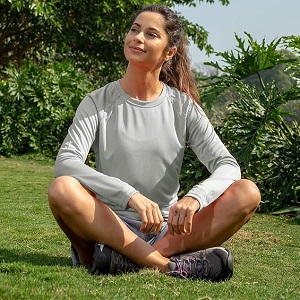
The best fabrics for women’s rashguards combine comfort, stretch, durability, and sun protection to keep you comfortable during every swim or beach day.
Choosing the right fabric is one of the most important parts of buying a women’s rashguard.
Nylon-Spandex Long Sleeve Rashguard for Women – Soft, flexible option for active beach days.

The women's gradient rashguard is designed with quick-dry fabric. The nylon-spandex blend (84% polyester, 16% elastane) is breathable and moisture-wicking, allowing it to dry rapidly after water activities.
While style and fit matter, the material determines how comfortable, durable, and protective your rashguard will feel in and out of the water.
Most rashguards are made from blends of nylon, polyester, and spandex, but each fabric offers different benefits depending on how you plan to use it.
Understanding the strengths of these materials can help you choose the best rashguard for swimming, surfing, travel, workouts, or everyday beach wear.
Why Fabric Matters in Rashguards
Rashguards are designed to handle water, sun exposure, stretching, and movement.
The best fabrics for women’s rashguards blend affects:
- Sun protection
- Quick-dry performance
- Stretch and flexibility
- Chlorine and saltwater resistance
- Overall comfort
A high-quality fabric can make a rashguard feel lightweight, breathable, and supportive while helping it last much longer.
Nylon Rashguards: Soft and Flexible
Nylon is one of the most popular rashguard materials because it feels smooth and soft against the skin.
It offers excellent stretch and flexibility, making it ideal for surfing, paddleboarding, and active swimming.
Pros of Nylon:
- Soft, comfortable texture
- Excellent stretch and mobility
- Lightweight feel
Cons:
- May fade faster in chlorine
- Less resistant to long-term UV exposure compared to polyester
Nylon rashguards are often preferred for comfort-focused swimwear and athletic movement.
Polyester Rashguards: Durable and Fade-Resistant
Polyester is known for durability and color retention.
It handles chlorine, saltwater, and sunlight better than many other fabrics, making it a strong choice for frequent swimmers.
Pros of Polyester:
- Excellent durability
- Better resistance to fading and stretching
- Quick-dry performance
Cons:
- Slightly less soft than nylon
- Can feel less flexible if not blended with spandex
Women who swim regularly or spend long hours outdoors often appreciate polyester’s long-lasting performance.
Spandex: The Stretch Factor
Spandex (also called elastane or Lycra) is rarely used alone but is blended with nylon or polyester to provide stretch.
It allows rashguards to move with the body comfortably.
Benefits of Spandex:
- Improved flexibility
- Better shape retention
- Comfortable body-hugging fit
Too much spandex, however, can make rashguards feel overly tight or wear out more quickly in high heat.
Popular Rashguards by Fabric Type
Here are five commonly available rashguard styles that highlight different fabric blends:
Polyester UPF 50+ Swim Shirt – Durable choice for frequent swimming and sun exposure.
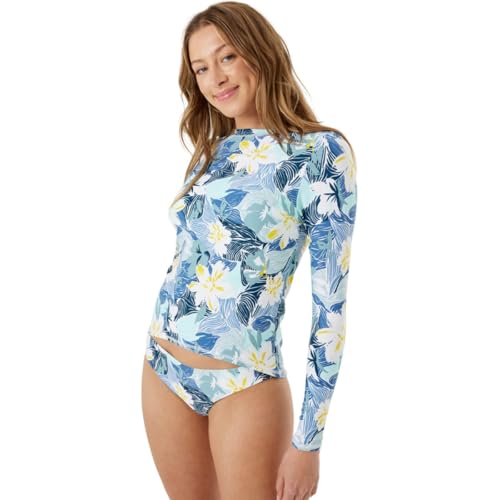
Fast-drying performance helps keep you comfortable in and out of the water, making this long-sleeve swim shirt ideal for active beach and water use.
Quick-Dry Polyester Blend Rashguard – Designed for travel and outdoor activities.

Surfing shirts made of UV block fabric with UPF 50+ protective function, offering you necessary body coverage and protecting you against rashes, abrasions, and harmful UV rays.
High-Stretch Athletic Rashguard with Spandex Blend – Ideal for surfing, yoga, and movement-focused use.

The material on this rashguard is breathable, quick drying, and moisture-wicking. It features ultra-stretch and is lightweight. The soft fabric will give you all-day comfort.
Chlorine-Resistant Polyester Rashguard for Pool Training – Built for long-term durability in chlorinated water.
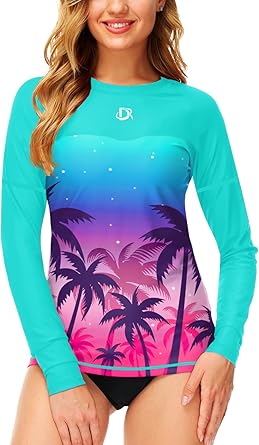
The rashguard is made from 84% polyester and 16% elastane, which are chlorine-resistant materials commonly used in swimming apparel. However, the product page doesn't explicitly state chlorine resistance as a feature.
These styles show how fabric blends can affect comfort and performance.
Which Rashguard Fabric Is Best?
The best fabric depends on your lifestyle. If comfort and flexibility matter most, nylon blends are an excellent choice.
If durability and fade resistance are your priorities, polyester performs better over time.
For the best balance, many women choose rashguards that combine polyester or nylon with a moderate amount of spandex.
By understanding fabric differences, you can choose a rashguard that feels better, lasts longer, and performs exactly the way you need it to.